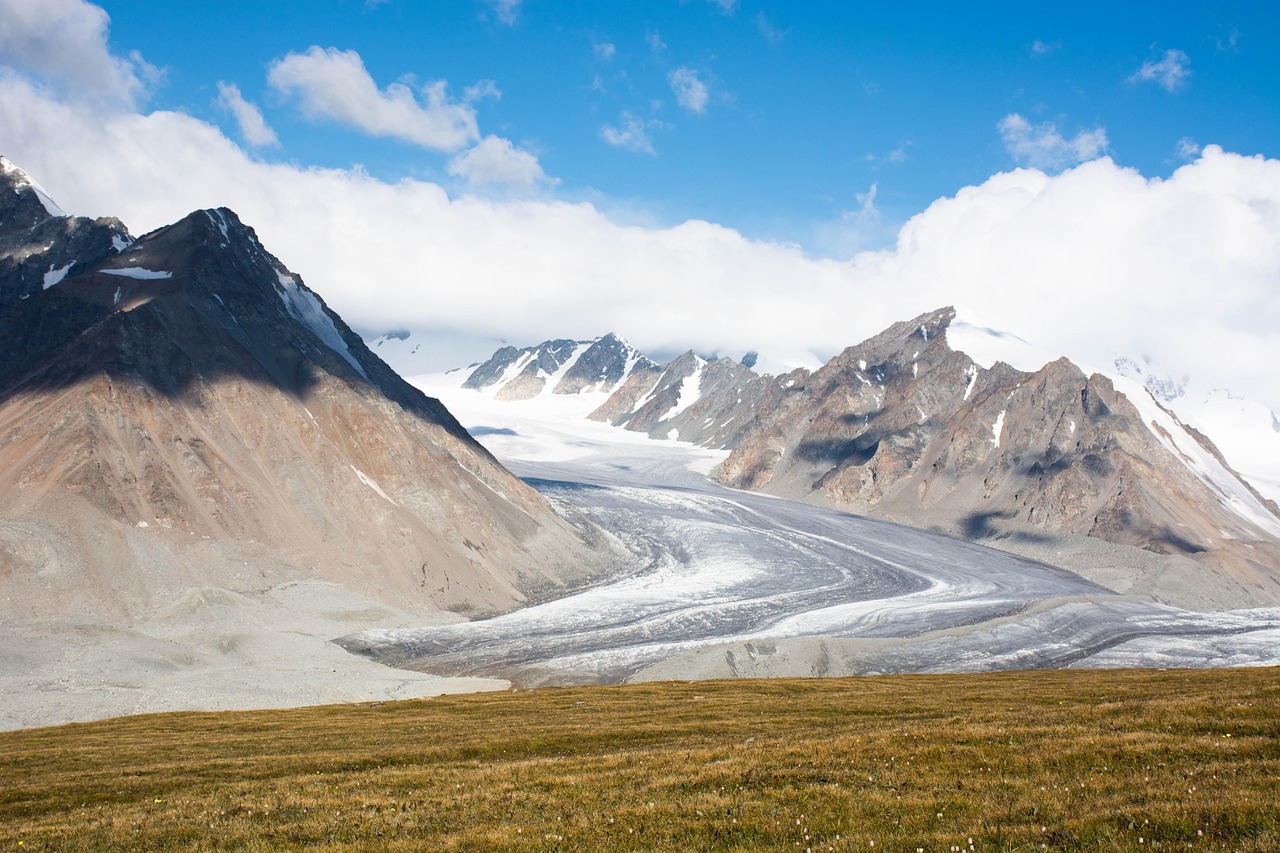
There’s a place where four nations meet but few travelers venture. Where snow leopards stalk through mountain passes and golden eagles soar from the arms of nomadic hunters. Where glaciers the size of small cities flow between peaks that pierce the sky at over 4,300 meters. This is the Altai Mountain Range—Mongolia’s most spectacular secret, hidden in plain sight at the edge of the world.
While tourists flock to the Gobi Desert and Khuvsgul Lake, the Altai remains wonderfully, magnificently overlooked. Those who make the journey to Mongolia’s far western frontier discover a landscape so raw and beautiful it seems almost unreal, and a culture so authentic it feels like stepping back in time. This is the story of why the Altai deserves recognition as one of Asia’s greatest mountain ranges and why it should be on every adventurer’s radar.
Where Giants Sleep: The Geography of the Altai Mountains
The Altai Mountain Range stretches across four countries—Russia, Kazakhstan, China, and Mongolia—but it’s in Mongolia’s Bayan-Ölgii Province where the range reveals its most dramatic face. Here, the mountains rise abruptly from the Mongolian steppe, their peaks eternally white with snow, their slopes striped with the tracks of ancient glaciers.
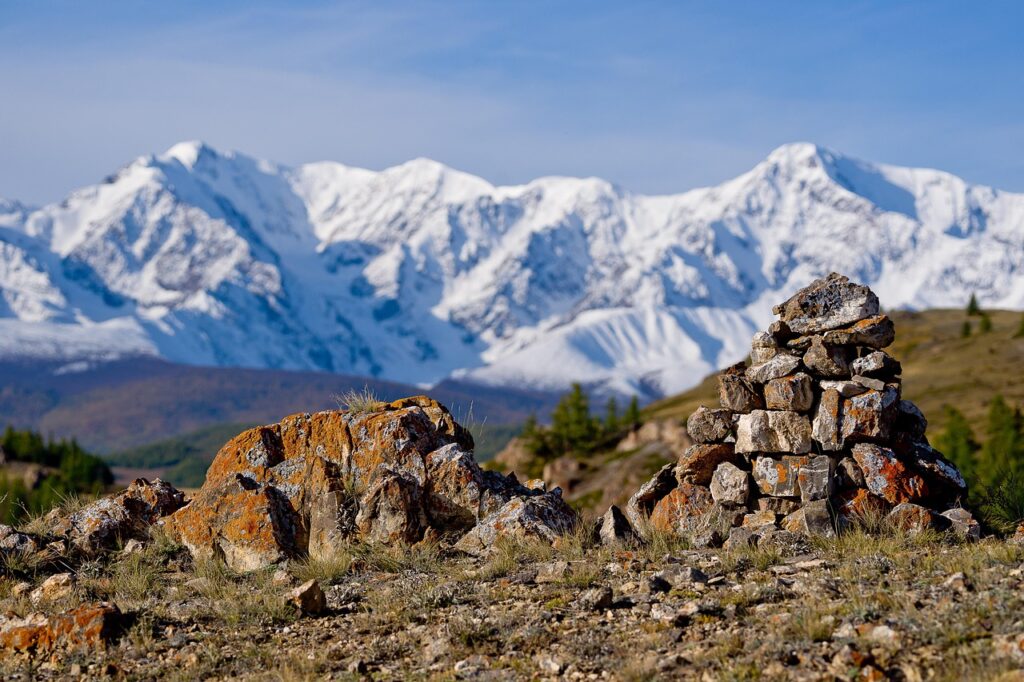
Stand in Ölgii, the provincial capital, and look west. The mountains dominate every horizon, close enough that you feel you could reach out and touch them, distant enough that they seem to belong to another world entirely. These aren’t the gentle, rolling hills of older mountain ranges worn smooth by time. The Altai are young, geologically speaking—still sharp-edged, still growing, still asserting their dominance over the landscape.
The crown jewel sits at the range’s heart: Altai Tavan Bogd National Park encompasses the Tavan Bogd massif, which contains Khuiten Uul at 4,374 meters—Mongolia’s highest mountain. The name “Tavan Bogd” translates to “Five Sacred Peaks,” and these mountains have been revered by local peoples for millennia. They’re not just geographic features—they’re spiritual anchors, eternal presences that have witnessed empires rise and fall.
Between the peaks flow 34 glaciers, rivers of ice that have carved the landscape into something otherworldly. The Potanin Glacier alone covers 23 square kilometers, a frozen expanse so vast it creates its own weather patterns. These glaciers feed three pristine alpine lakes—Khoton, Khurgan, and Dayan—whose turquoise waters reflect the mountains in mirror-perfect clarity on calm mornings.
The Last Kingdom: Why the Altai Remains Undiscovered
In an age of Instagram tourism and overcrowded national parks, how does a mountain range this spectacular remain relatively unknown? The answer lies in three words: distance, difficulty, and difference.
Distance: The Altai sits 1,640 kilometers from Ulaanbaatar, Mongolia’s capital. That’s not a drive you complete in a day. It’s a three-hour flight or a multi-day overland expedition through some of Asia’s most challenging terrain. There are no direct international flights, no cruise ships docking at convenient ports, no highways with rest stops every 50 kilometers. Getting to the Altai requires commitment.
Difficulty: This isn’t a destination for casual tourists. The journey by four-wheel drive from Ölgii to the park takes 6 to 8 hours depending on road conditions. “Roads” is actually generous—you’re following tire tracks across open steppe, fording rivers without bridges, navigating mountain passes that would make most drivers weep. The infrastructure simply doesn’t exist for mass tourism, and that’s precisely what keeps the Altai pristine.
Difference: Bayan-Ölgii Province is unlike anywhere else in Mongolia. Over 90% Kazakh rather than Mongol, Muslim rather than Buddhist, this is a place where the call to prayer echoes across valleys, where the primary language is Kazakh, where culture and tradition follow rhythms established centuries ago in Central Asia rather than on the Mongolian steppe. For travelers expecting typical Mongolian experiences, the Altai presents something wonderfully unexpected.
These barriers—distance, difficulty, difference—filter out casual visitors. Those who do make the journey tend to be serious adventurers, cultural enthusiasts, wildlife photographers, and mountaineers who’ve done their research and come prepared. The result? Valleys where you might not see another tourist for days, experiences unspoiled by commercialization, and interactions with local people that feel genuine because they are.
Eagles, Snow Leopards and Nomads: The Living Altai
Mountains are impressive, but it’s life that makes a landscape truly magnificent. And the Altai teems with life—from the microscopic organisms in glacial meltwater to the apex predators that rule the peaks.
The Ghost Cats of the High Peaks
Somewhere up there, moving through boulder fields and snow-covered slopes with liquid grace, live the snow leopards. Bayan-Ölgii is home to the second largest snow leopard population globally, making it ideal for learning about these majestic animals, which attracts wildlife photographers worldwide. These cats are so elusive that local herders who’ve spent their entire lives in these mountains have never seen one. But they’re there—camera traps prove it, tracks in the snow reveal their passage, and occasionally, just occasionally, a lucky observer catches a glimpse of gray-white fur disappearing into the rocks.
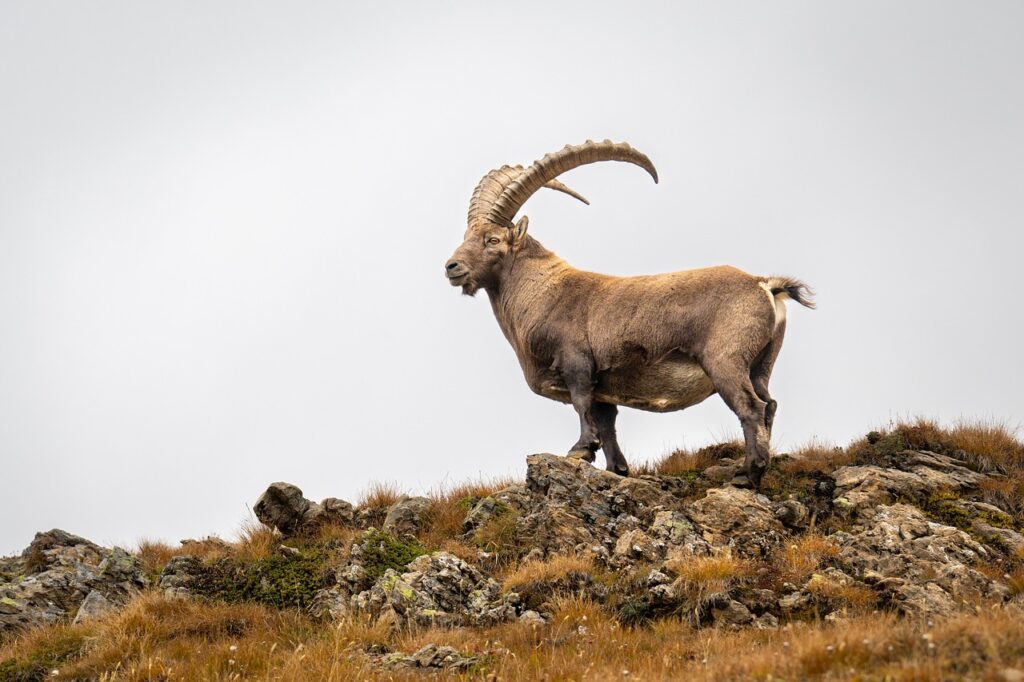
The snow leopard has become a symbol of the Altai’s wildness. In a world where apex predators are increasingly confined to zoos and protected corridors, here they roam vast territories, hunting ibex on impossible cliffs, raising cubs in hidden dens, living lives humans barely comprehend. Their presence speaks to the Altai’s ecological health and its genuine wilderness character.
The Eagle Hunters: A Living Tradition
But the Altai’s most iconic predator hunts in partnership with humans. Golden eagles, magnificent raptors with wingspans exceeding two meters, have been trained by Kazakh hunters for centuries. Today, approximately 250 eagle hunters continue this ancient practice in western Mongolia, representing the vast majority of the world’s remaining practitioners.
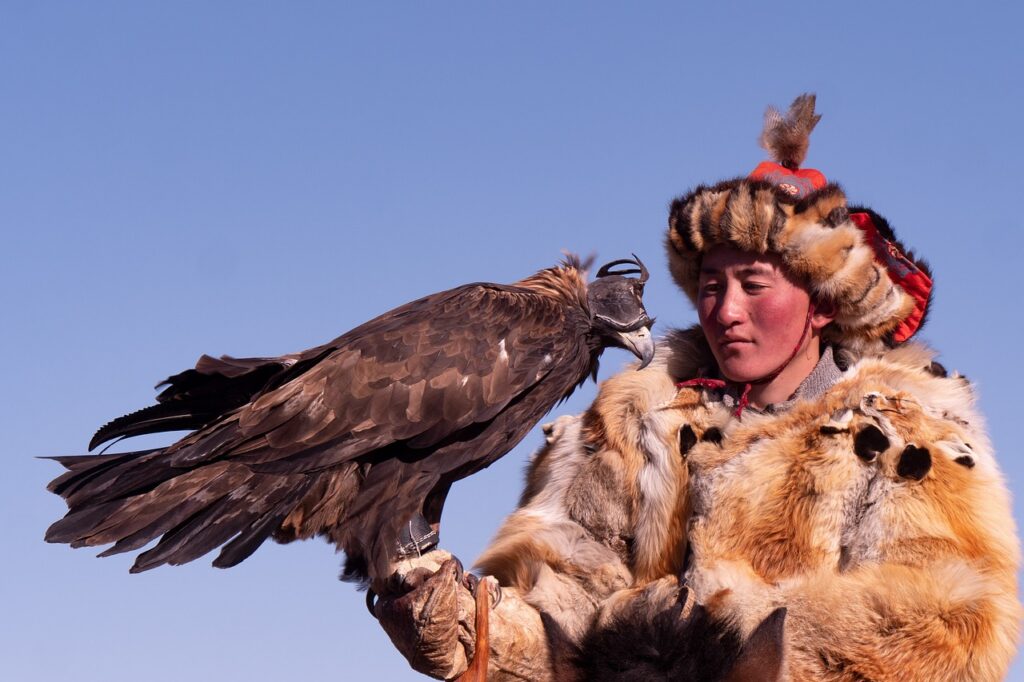
Imagine standing on a snow-covered ridge in winter, watching a bürkitshi (eagle hunter) raise his gloved arm. The eagle, weighing up to six kilograms, perches there with absolute trust. At a signal imperceptible to you, the bird launches—a meteor of feathers and talons accelerating down the slope toward prey spotted from impossible distances. The strike happens in seconds. Then the eagle returns, not because it’s forced, but because the partnership benefits both hunter and bird.
This isn’t a performance staged for tourists, though visitors can witness it. It’s a working tradition passed from father to son, a skill requiring years to master, and a relationship between species that speaks to humanity’s oldest connections with the natural world. In the Altai, eagle hunting isn’t preserved in museums—it’s practiced every winter as it has been for millennia.
Wild Kingdoms
Beyond leopards and eagles, the Altai hosts wildlife found nowhere else or seen nowhere else so readily. Argali sheep—the world’s largest wild sheep—navigate cliffs with horns that can span a meter in males weighing 180 kilograms. Siberian ibex perform mountain acrobatics that defy physics. Gray wolves howl in the darkness. Brown bears emerge from hibernation in spring to feast on marmots just emerging from their own winter sleep.
Overhead, the sky belongs to raptors. Bearded vultures with three-meter wingspans drop bones from great heights to extract marrow. Cinereous vultures circle on thermals, their shadows crossing valleys. Saker falcons hunt with speed that blurs vision. This is what a healthy mountain ecosystem looks like—predators and prey in ancient balance, cycles of life uninterrupted by human interference.
Stories Written in Stone: The Ancient Altai
The Altai’s human history extends back thousands of years, written not in books but in stone. Throughout the mountain range, particularly at sites like Tsagaan Salaa, Baga Oigor, and Aral Tolgoi, ancient peoples carved images into rock faces—creating art that has survived millennia.
Shiveet Khairkhan Mountain is home to around 10,000 petroglyphs, numerous human statues, and Turkic stone men, with ancient etchings dating from the Neolithic period to the Bronze Age. These aren’t crude scratches—many display remarkable artistic skill, showing wild animals in motion, hunters on horseback, wheeled carts, and ceremonial scenes whose meaning we can only guess.
Walking among these petroglyphs creates a profound connection to the past. The artists who created them stood where you stand, saw the same mountains, breathed the same thin air. Their livestock grazed these valleys. Their children played in these streams. The images they left behind speak across millennia—messages about what mattered to them, what they hunted, what they feared, what they celebrated.
The Petroglyphic Complexes of the Mongolian Altai earned UNESCO World Heritage status in recognition of their significance. But official recognition aside, there’s something deeply moving about encountering these ancient artworks in their natural context—not behind museum glass, but open to the elements, in the landscape that inspired them.
Adventures at the Edge of the World: Exploring the Altai Mountains
The Altai isn’t a place you visit to relax. It’s a destination that demands physical effort, mental preparation, and respect for the challenges it presents. But for those willing to meet the mountains on their terms, the rewards transcend description.
Climbing Mongolia’s Highest Peaks
Mountaineers come to the Altai for Khuiten Peak, Mongolia’s highest point at 4,374 meters. The climb requires technical skills, proper equipment, and acclimatization, but it’s achievable for experienced alpinists. Standing on that summit, you can see three countries—Mongolia, Russia, and China—spread out below. On clear days, the view extends to horizons so distant they seem to show the curvature of the Earth.
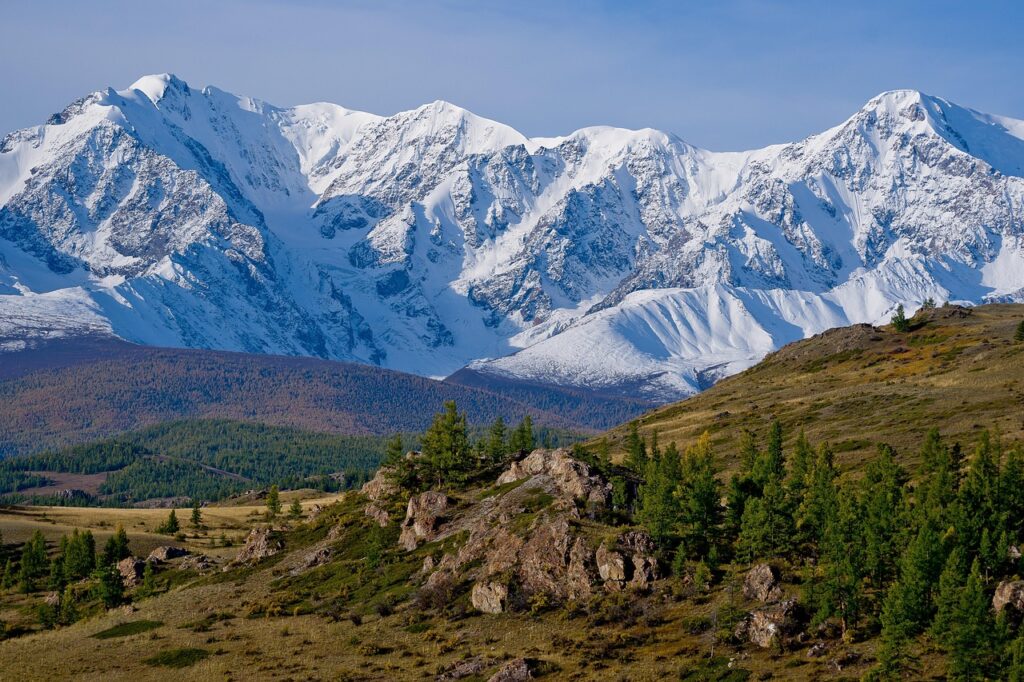
For those seeking less technical ascents, Malchin Peak (4,037 meters) offers the achievement of a 4,000-meter summit without requiring mountaineering equipment. The hike challenges your lungs and legs, but the summit rewards you with views of the Five Sacred Peaks in their full glory.
Walking on Ancient Ice
The Potanin Glacier trek draws adventurers from around the world. The 36-kilometer journey takes you through landscapes that seem more Mars than Earth—moraines of tumbled rock, streams of glacial meltwater the color of ground turquoise, and finally, the glacier itself. Walking on ice that fell as snow centuries ago, hearing it crack and groan as it slowly flows downhill, you gain perspective on timescales that dwarf human life.
The trek typically involves horses carrying equipment while you hike unburdened—the traditional nomadic way. At night, you camp in valleys where the silence is so complete you can hear your heartbeat, and the stars shine so brightly they illuminate the landscape in silver.
Cultural Immersion in Kazakh Villages
But the Altai’s greatest adventures might not involve peaks or glaciers. Spending time with Kazakh families in places like Sagsai village, participating in daily life—herding animals, milking mares for kumis, helping move camps, learning traditional crafts—provides insights no guidebook can offer. These aren’t staged cultural experiences. They’re invitations into real lives lived according to rhythms unchanged for generations.
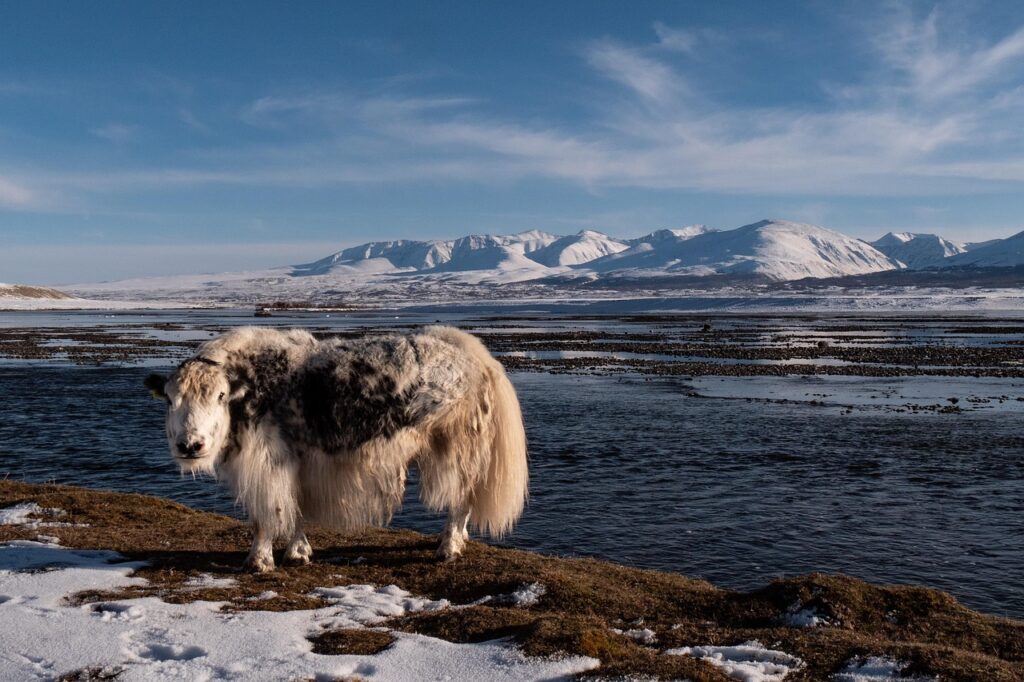
The hospitality you encounter defies Western expectations. Families with almost nothing in material terms share meals, offer beds in their gers, refuse payment, and treat strangers like honored guests. This generosity isn’t naive—it’s cultural bedrock, reflecting values developed over centuries of nomadic life where survival depended on mutual support.
When to Discover the Altai Mountain Range
The Altai reveals different faces throughout the year, though realistically, summer is the only practical season for most visitors.
June through September opens the mountains to exploration. June brings wildflowers carpeting alpine meadows and dramatic waterfalls from snowmelt. July and August offer the warmest temperatures (which still means freezing nights at altitude) and full access to all areas. September brings autumn colors that paint the landscape in gold and crimson, plus the beginning of eagle hunting season.
Early October brings the Golden Eagle Festival to Ölgii, when dozens of eagle hunters gather to compete in traditional contests. It’s spectacular but bitterly cold, with temperatures often below freezing and snow possible.
November through May closes the Altai to all but the hardiest souls. Temperatures plunge to -40°C, roads become impassable, tourist infrastructure shuts down completely, and the mountains belong solely to local herders and wildlife adapted to extreme cold.
For comprehensive planning information including itineraries, costs, and logistics, see our detailed guide: How to Plan a Tour to the Altai Mountains.
Getting to Mongolia’s Hidden Gem
The journey to the Altai begins in Ulaanbaatar, Mongolia’s capital. From there, you have two options: fly or drive. Flying takes three hours on small domestic aircraft to Ölgii. Driving takes 4-5 days across some of Mongolia’s most challenging terrain—an adventure itself for those with time and proper vehicles.
From Ölgii, the real adventure begins. The park is approximately 180 kilometers away via dirt roads crossing impressive and remote landscapes, with the journey taking 6-8 hours in a 4×4 vehicle depending on conditions and route chosen. There’s no public transportation—private vehicles, tour operators, or rental 4x4s are your only options.
This remoteness isn’t a bug—it’s a feature. It’s what keeps the Altai pristine, what filters out those unwilling to make the effort, what ensures that those who do arrive have earned their encounter with this spectacular landscape.
For guidance on vehicle requirements and self-drive routes, including GPS coordinates, review our comprehensive resource: Top 10 Off-Road Routes in Mongolia You Can Self-Drive.
Why the Altai Mountain Range Deserves Your Attention
In a world where true wilderness becomes increasingly rare, where cultural traditions fade under globalization’s pressure, where adventure tourism often means manufactured experiences in controlled environments, the Altai Mountain Range offers something genuine.
This is adventure that requires effort and rewards it proportionally. This is wilderness where nature still dominates human presence. This is culture living and breathing rather than preserved and performed. This is why the Altai deserves recognition as one of Asia’s greatest mountain destinations—not in spite of its difficulty, but because of it.
The mountains that rise at the junction of four nations offer experiences you can’t find elsewhere: watching eagle hunters work with their birds in landscapes unchanged for millennia, tracking snow leopards through high passes, camping beneath glaciers older than civilization, sharing kumis with nomadic families who measure wealth not in money but in horses and hospitality.
Yes, getting there is hard. Yes, the conditions are challenging. Yes, the logistics are complex. But these barriers ensure that when you stand at the base of the Five Sacred Peaks, when you walk on the Potanin Glacier, when an eagle hunter invites you into his home, you’ve earned the privilege. And that makes all the difference.
For detailed information about what makes this region so special, including activities and visitor tips, explore our complete guide: Why You Should Visit Altai Tavan Bogd National Park.
Planning Your Journey to the Altai Mountains
The Altai rewards preparation. This isn’t a destination for spontaneous arrival. Permits are required for border zones, 4×4 rental vehicles must be expedition-ready, equipment must handle extreme weather, and logistics need careful coordination.
For questions about guide requirements and regulations, see our detailed post: Can You Visit Altai Without a Guide? Here’s What You Need to Know.
For comprehensive regional information covering culture, nature, and practical realities, review our extensive resource: Altai Region Travel Guide: Culture, Nature and What to Expect.
Ready to discover Mongolia’s hidden gem? Altai.Rent specializes in Altai Mountain expeditions, providing everything from fully equipped 4×4 rentals in Western Mongolia to comprehensive guided tours. Based in Ölgii with deep local knowledge and connections, they’re your gateway to authentic Altai experiences. Whether you’re planning to summit Khuiten Peak, trek to the Potanin Glacier, meet eagle hunters, or simply immerse yourself in one of Earth’s last wild places, they provide the expertise and equipment you need.
The Altai Mountain Range waits at the edge of the world—hidden from the masses, spectacular beyond imagination, ready to reveal itself to those willing to make the journey. The only question is: are you ready to discover Mongolia’s greatest secret?