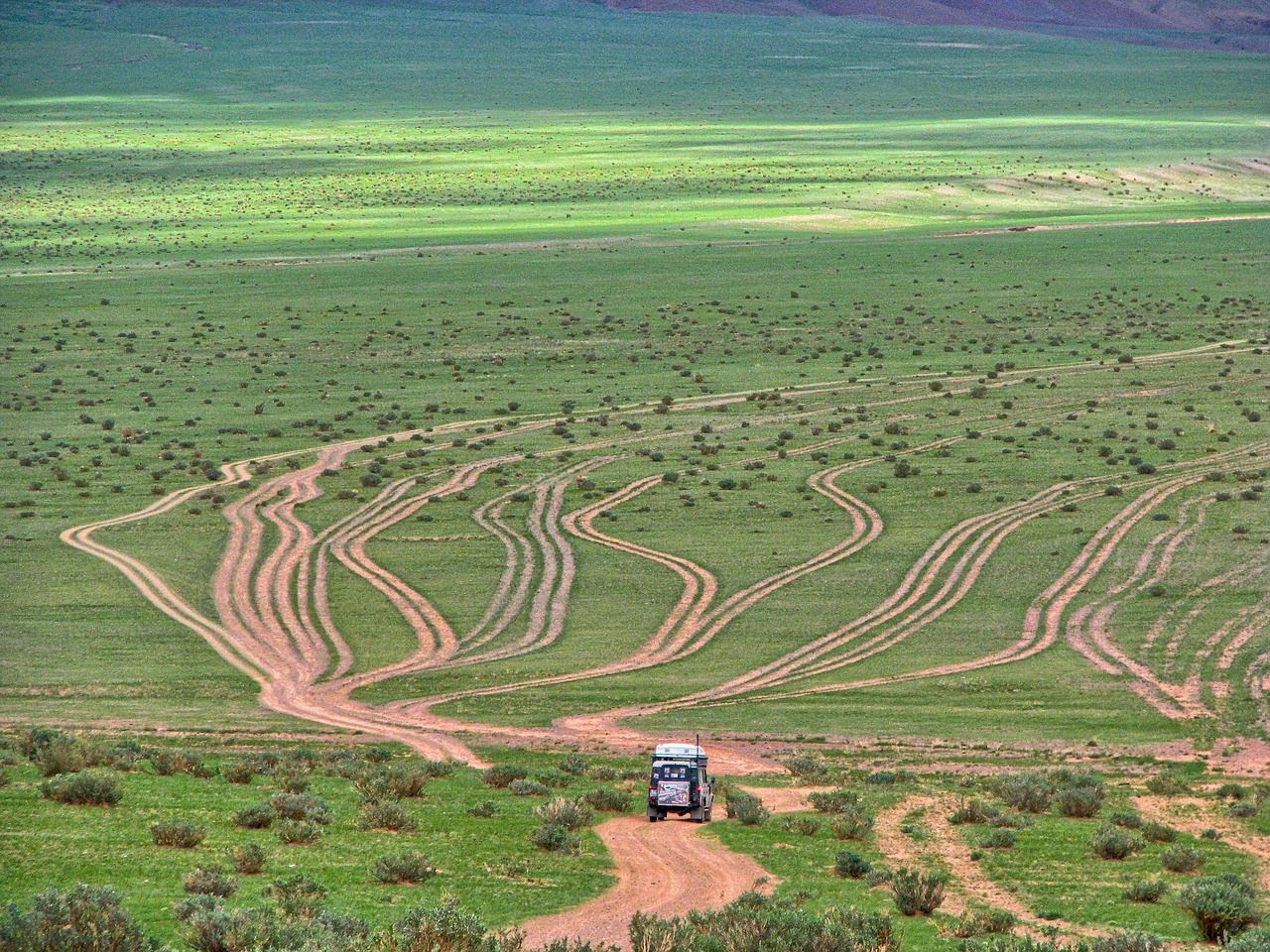
Vast wilderness beckons adventurous drivers with some of the world’s most spectacular off-road routes in Mongolia. From the singing sands of the Gobi Desert to the snow-capped peaks of the Altai Mountains, these self-drive routes offer the freedom to explore one of Earth’s last great frontiers at your own pace. Here’s your complete guide to Mongolia’s top 10 self-drive routes, complete with GPS coordinates, difficulty ratings, and seasonal accessibility information.
Essential Information Before You Start
Before diving into the routes, ensure you have the proper vehicle for Mongolia self drive adventures. A reliable 4×4 rental is non-negotiable for these journeys. Review our comprehensive Ultimate Guide to Renting a 4×4 in Mongolia to choose the right vehicle and understand what equipment you’ll need.
All coordinates provided below are in decimal degrees format (DD) for easy use with GPS devices and navigation apps like Maps.me, which is essential for offline navigation in Mongolia.
Route 1: The Classic Gobi Loop
Distance: 1,800-2,000 km
Duration: 10-14 days
Difficulty: Moderate (3/5)
Best Season: May to October
Starting Point: Ulaanbaatar (47.9220°N, 106.9182°E)
Route Overview
The Classic Gobi Loop is Mongolia’s most popular self-drive circuit, combining dramatic desert landscapes, towering sand dunes, and significant historical sites. This route takes you through the heart of the Gobi Desert, visiting its most iconic landmarks.
Key Waypoints & GPS Coordinates
- Ulaanbaatar to Baga Gazryn Chuluu (260 km)
- Baga Gazryn Chuluu: 46.1500°N, 106.2333°E
- Rocky formations and ruins; moderate dirt roads
- Tsagaan Suvarga (White Stupa) (150 km)
- Coordinates: 45.3186°N, 106.8333°E
- Spectacular eroded cliffs; good dirt tracks
- Yolyn Am (Eagle Valley) (300 km)
- Coordinates: 43.4833°N, 104.0500°E
- Ice canyon in summer; paved approach, rough final 20 km
- Khongoryn Els (Singing Dunes) (200 km)
- Coordinates: 43.7667°N, 102.4000°E
- Mongolia’s largest sand dunes; sandy tracks, reduce tire pressure
- Bayanzag (Flaming Cliffs) (180 km)
- Coordinates: 44.1333°N, 103.7333°E
- Famous dinosaur fossil site; moderate off-road
- Ongi Monastery (200 km)
- Coordinates: 45.3333°N, 104.0833°E
- Historic monastery ruins; good tracks
- Return to Ulaanbaatar (450 km via Arvaikheer)
- Mix of paved and dirt roads
Driving Notes
- Total off-road percentage: 60%
- River crossings: 2-3 depending on route
- Fuel stops: Dalanzadgad, Bayandalai, Mandalgovi
- The singing dunes section requires experience in sand driving
- Spring (April-May) brings dust storms; avoid if possible
Seasonal Accessibility
- May-June: Excellent, wildflowers bloom
- July-August: Hot but manageable, occasional rain
- September-October: Perfect temperatures, clear skies
- November-April: Too cold, many ger camps closed
Route 2: Khuvsgul Lake Northern Circuit
Distance: 2,000 km round trip
Duration: 7-10 days
Difficulty: Moderate (3/5)
Best Season: June to September
Starting Point: Ulaanbaatar (47.9220°N, 106.9182°E)
Route Overview
Journey to Mongolia’s “Dark Blue Pearl,” a pristine alpine lake near the Russian border. This route combines paved highways with mountain tracks through taiga forests.
Key Waypoints & GPS Coordinates
- Ulaanbaatar to Erdenet (370 km)
- Erdenet: 49.0333°N, 104.0833°E
- Fully paved via Darkhan
- Erdenet to Murun (240 km)
- Murun: 49.6333°N, 100.1500°E
- 80% paved, improving roads
- Murun to Khatgal (Lake Khuvsgul) (100 km)
- Khatgal: 50.4333°N, 100.1667°E
- Lake coordinates: 51.0000°N, 100.5000°E
- Mostly paved with rough sections
- Driving to the Northern Lake Shores Option (362 km loop)
- Western shore road: rough 4×4 track
- Allow 2-3 days for full circuit
- Alternative return via Tsetserleg (different scenery)
- Tsetserleg: 47.4756°N, 101.4542°E
- Adds 200 km but shows Arkhangai Province
Driving Notes
- Total off-road percentage: 30% (70% if circumnavigating lake)
- Altitude: 1,645m at lake level
- Mountain passes can be steep and muddy after rain
- Limited fuel between Murun and lake
- Cell coverage spotty after Murun
Seasonal Accessibility
- June-September: Peak season, all roads accessible
- July-August: Warmest, most crowded
- September: Autumn colors, fewer tourists
- October-May: Lake freezes (truck routes on ice in winter), most facilities closed
Route 3: Altai Tavan Bogd Expedition
Distance: 3,800 km round trip
Duration: 14-21 days
Difficulty: Extreme (5/5)
Best Season: June to September
Starting Point: Ulaanbaatar (47.9220°N, 106.9182°E)
Route Overview
Mongolia’s most challenging self-drive route takes you to the country’s highest peaks in the remote western Altai Mountains. This expedition-grade journey requires serious preparation and an expedition-equipped 4×4 rental in Mongolia.
Key Waypoints & GPS Coordinates
- Ulaanbaatar to Arvaikheer (430 km)
- Arvaikheer: 46.2633°N, 102.7783°E
- Paved road
- Arvaikheer to Altai City (650 km)
- Altai: 46.3725°N, 96.2578°E
- Mix of paved and rough dirt
- Altai to Olgii (350 km)
- Olgii: 48.9683°N, 89.9625°E
- Challenging mountain passes, very rough
- Olgii to Altai Tavan Bogd National Park (180 km)
- Base Camp: 49.1444°N, 87.8167°E
- Khuiten Peak: 49.1444°N, 87.8167°E (4,374m)
- Extremely rough, 5-7 hours driving
- Multiple river crossings
- Return options: Same route or via Khovd (adds distance but different scenery)
Driving Notes
- Total off-road percentage: 75%
- Border permit required (obtain in Olgii)
- River crossings: 10+ depending on route
- No fuel for 350+ km stretches
- Carry 100L+ extra fuel
- GPS essential; no road signs
- Consider hiring local guide in Olgii
- Recovery equipment mandatory
Seasonal Accessibility
- June-September ONLY: Other months impassable
- June: Snow still present at high elevations
- July-August: Best conditions, but can rain
- September: Clear but getting cold at night
- October-May: Closed by snow, rivers frozen
Special Requirements
- Military border zone permit from Olgii
- Park entry fee
- Minimum 2 vehicles recommended for safety
- Satellite phone or emergency beacon strongly advised
Route 4: The Trans-Mongolian Steppe Crossing
Distance: 1,200 km
Duration: 5-7 days
Difficulty: Moderate (3/5)
Best Season: May to October
Starting Point: Ulaanbaatar (47.9220°N, 106.9182°E)
Ending Point: Choibalsan (48.0806°N, 114.5397°E)
Route Overview
Cross the endless eastern steppe to Mongolia’s remote third city, experiencing the vastness that defines this country. This route offers solitude and wildlife viewing opportunities.
Key Waypoints & GPS Coordinates
- Ulaanbaatar to Baganuur (130 km)
- Baganuur: 47.7833°N, 108.2833°E
- Paved
- Baganuur to Ondorkhaan (200 km)
- Ondorkhaan: 47.3167°N, 110.6500°E
- Mix of paved and dirt
- Ondorkhaan to Choibalsan (350 km)
- Choibalsan: 48.0806°N, 114.5397°E
- Mostly dirt tracks through open steppe
- Optional: Buir Lake Extension (150 km north)
- Buir Lake: 47.8833°N, 117.6833°E
- Border lake with China
Driving Notes
- Total off-road percentage: 50%
- Vast open terrain, easy to get lost
- Wildlife: gazelles, marmots, eagles
- Very limited services between major towns
- Navigation by compass useful when tracks multiply
Seasonal Accessibility
- May-October: Best months
- July-August: Can be muddy after heavy rain
- November-April: Possible but very cold, limited services
Route 5: Orkhon Valley Cultural Circuit
Distance: 800 km
Duration: 4-6 days
Difficulty: Easy to Moderate (2/5)
Best Season: May to October
Starting Point: Ulaanbaatar (47.9220°N, 106.9182°E)
Route Overview
Explore Mongolia’s historical heartland, visiting ancient capitals, Buddhist monasteries, and stunning waterfalls. This is the most accessible route for less experienced off-roaders.
Key Waypoints & GPS Coordinates
- Ulaanbaatar to Kharkhorin (370 km)
- Kharkhorin (Karakorum): 47.1978°N, 102.8231°E
- Ancient capital; mostly paved
- Erdene Zuu Monastery (in Kharkhorin)
- Coordinates: 47.2042°N, 102.8256°E
- Mongolia’s oldest Buddhist monastery
- Orkhon Waterfall (60 km)
- Coordinates: 46.7500°N, 101.9833°E
- Scenic dirt track
- Tsetserleg (100 km)
- Coordinates: 47.4756°N, 101.4542°E
- Provincial capital with services
- Return via Ogii Lake (different route)
- Ogii Lake: 47.7667°N, 102.7333°E
- Bird watching destination
Driving Notes
- Total off-road percentage: 40%
- Well-traveled routes, easier navigation
- Good ger camp infrastructure
- Suitable for less experienced drivers
- Can be done in a capable AWD vehicle
Seasonal Accessibility
- May-October: Excellent conditions
- Year-round possible on main routes
- Waterfall area muddy in spring
Route 6: Terkhiin Tsagaan Lake & Volcanic Landscapes
Distance: 900 km round trip
Duration: 4-6 days
Difficulty: Moderate (3/5)
Best Season: June to September
Starting Point: Ulaanbaatar (47.9220°N, 106.9182°E)
Route Overview
Visit a stunning volcanic crater lake surrounded by extinct volcanoes and lava fields in central Mongolia’s highlands.
Key Waypoints & GPS Coordinates
- Ulaanbaatar to Tsetserleg (460 km)
- Coordinates: 47.4756°N, 101.4542°E
- Mix of paved and gravel
- Tsetserleg to Tariat (80 km)
- Tariat: 48.1500°N, 99.8833°E
- Good dirt road
- Terkhiin Tsagaan Lake (White Lake) (25 km)
- Coordinates: 48.1500°N, 99.7333°E
- Volcanic crater lake
- Khorgo Volcano Crater (adjacent)
- Coordinates: 48.1667°N, 99.7000°E
- Can drive to base, short hike to rim
Driving Notes
- Total off-road percentage: 45%
- Altitude: 2,060m at lake
- Rocky volcanic terrain
- Several ger camps at lake
- Can combine with Khuvsgul route
Seasonal Accessibility
- June-September: Peak season
- May & October: Possible but cold
- November-April: Snow-covered, difficult access
Route 7: Gun-Galuut Nature Reserve & Terelj Loop
Distance: 400 km
Duration: 2-3 days
Difficulty: Easy (1/5)
Best Season: Year-round
Starting Point: Ulaanbaatar (47.9220°N, 106.9182°E)
Route Overview
Perfect weekend escape from the capital, combining accessible wilderness with stunning rock formations. Ideal for first-time Mongolia self drive adventures.
Key Waypoints & GPS Coordinates
- Genghis Khan Statue Complex (55 km)
- Coordinates: 47.8083°N, 107.5303°E
- Paved road, massive statue
- Gorkhi-Terelj National Park (15 km further)
- Park entrance: 47.9500°N, 107.4167°E
- Turtle Rock: 47.9833°N, 107.4500°E
- Mix of paved and dirt
- Gun-Galuut Nature Reserve (130 km south)
- Coordinates: 47.3167°N, 108.4000°E
- Wildlife viewing, wetlands
- Dirt roads through steppe
Driving Notes
- Total off-road percentage: 30%
- Close to capital, easy rescue if needed
- Good for testing equipment and skills
- Many ger camps and facilities
- Can be crowded in summer
Seasonal Accessibility
- Year-round accessible
- Winter: Beautiful but very cold (-30°C)
- July-August: Busiest, book accommodation ahead
Route 8: Middle Gobi Archaeological Trail
Distance: 1,000 km
Duration: 5-7 days
Difficulty: Moderate (2.5/5)
Best Season: May to October
Starting Point: Ulaanbaatar (47.9220°N, 106.9182°E)
Route Overview
Less-traveled alternative to the Classic Gobi, focusing on archaeological sites and ancient ruins through central Mongolia.
Key Waypoints & GPS Coordinates
- Ulaanbaatar to Mandalgovi (280 km)
- Mandalgovi: 45.7625°N, 106.2708°E
- Mostly paved
- Ikh Gazryn Chuluu (100 km north)
- Coordinates: 46.3833°N, 106.0500°E
- Granite mountains, rock formations
- Tsagaan Suvarga (160 km south)
- Coordinates: 45.3186°N, 106.8333°E
- Layered cliff formations
- Sum Khokh Burd (Historical site)
- Coordinates: 45.4500°N, 106.5000°E
- Ancient ruins
Driving Notes
- Total off-road percentage: 55%
- Less infrastructure than south Gobi
- Bring all supplies from Ulaanbaatar
- Good wildlife viewing
- Fewer tourists
Seasonal Accessibility
- May-October: Optimal
- Spring: Dust storms possible
- Summer: Hot but manageable
Route 9: Uvs Lake & Northern Altai
Distance: 3,200 km round trip
Duration: 12-16 days
Difficulty: Very Hard (4/5)
Best Season: June to September
Starting Point: Ulaanbaatar (47.9220°N, 106.9182°E)
Route Overview
Explore Mongolia’s largest lake by surface area and the northern Altai mountains, a route rarely attempted by tourists.
Key Waypoints & GPS Coordinates
- Ulaanbaatar to Uliastai (1,100 km)
- Uliastai: 47.7433°N, 96.8433°E
- Long drive, mix of paved and rough
- Uvs Lake (250 km north)
- Coordinates: 50.3333°N, 92.6667°E
- Saline lake, lowest point in Mongolia
- Kharkhiraa-Turgen Mountains (nearby)
- Coordinates: 49.5000°N, 91.5000°E
- Glaciers and waterfalls
Driving Notes
- Total off-road percentage: 70%
- Extremely remote, limited services
- Multiple vehicles recommended
- Satellite communication advised
- Recovery gear essential
Seasonal Accessibility
- June-September ONLY
- July-August: Best conditions
- Roads impassable other months
Route 10: The Nomadic Herder Route (Flexible)
Distance: Variable (600-1,500 km)
Duration: 4-10 days
Difficulty: Moderate (2.5/5)
Best Season: May to October
Starting Point: Various
Route Overview
Not a fixed route but a philosophy: follow the seasons and nomadic movements through central and northern grasslands. Customize based on time and interests.
Recommended Areas & GPS Coordinates
- Arkhangai Province Base: 47.4756°N, 101.4542°E
- Khangai Mountains Region: 47.5000°N, 100.5000°E
- Nomadic Summer Pastures: 48.0000°N, 101.0000°E
Approach
- Use Maps.me to find ger camps and settlements
- Ask locals for directions to seasonal camps
- Follow herds and tracks
- Very flexible itinerary
- Immersive cultural experience
Driving Notes
- Total off-road percentage: 60-80%
- Navigation by local knowledge
- High cultural interaction
- Best with Mongolian language skills or guide
- Most authentic Mongolia experience
Seasonal Accessibility
- May-October: Follow seasonal migration
- Summer: High pastures
- Autumn: Return to winter camps
Essential Maps & Navigation Resources
Recommended Mapping Apps
- Maps.me: Offline maps with route tracking (ESSENTIAL)
- Google Maps: Limited use off-road but good for towns
- iOverlander: Camping spots and points of interest
- Gaia GPS: Advanced topographic mapping
GPS Data Formats
All coordinates provided in this guide use Decimal Degrees (DD) format: XX.XXXX°N, YY.YYYY°E
To convert to Degrees Minutes Seconds (DMS) if your device requires it:
- Use online conversion tools
- Or use device settings to change display format
Downloading Routes
- Save waypoints to your GPS device before departure
- Download offline maps for entire route
- Print physical backup maps
- Mark fuel stops and emergency contact points
Difficulty Rating System Explained
Easy (1/5): Mostly paved or well-maintained gravel roads, minimal off-road experience needed, suitable for capable AWD vehicles
Moderate (2-3/5): Mix of dirt tracks and paved roads, basic off-road skills required, 4×4 essential, river crossings possible
Hard (4/5): Majority off-road, significant obstacles, experienced driver required, recovery equipment needed, remote locations
Extreme (5/5): Expedition-grade routes, expert skills mandatory, full recovery equipment, satellite communication, multiple vehicles recommended
Seasonal Accessibility Chart
| Route | Jan-Mar | Apr-May | Jun-Aug | Sep-Oct | Nov-Dec |
|---|---|---|---|---|---|
| 1. Gobi Loop | ❌ | ⚠️ | ✅ | ✅ | ❌ |
| 2. Khuvsgul Lake | ❌ | ❌ | ✅ | ⚠️ | ❌ |
| 3. Altai Tavan Bogd | ❌ | ❌ | ✅ | ⚠️ | ❌ |
| 4. Eastern Steppe | ❌ | ⚠️ | ✅ | ✅ | ❌ |
| 5. Orkhon Valley | ❌ | ⚠️ | ✅ | ✅ | ❌ |
| 6. Terkhiin Tsagaan | ❌ | ❌ | ✅ | ⚠️ | ❌ |
| 7. Terelj Loop | ⚠️ | ✅ | ✅ | ✅ | ⚠️ |
| 8. Middle Gobi | ❌ | ⚠️ | ✅ | ✅ | ❌ |
| 9. Uvs Lake | ❌ | ❌ | ✅ | ⚠️ | ❌ |
| 10. Nomadic Route | ❌ | ⚠️ | ✅ | ✅ | ❌ |
✅ = Optimal conditions
⚠️ = Possible with caution/preparation
❌ = Not recommended/dangerous
Planning Your Mongolia Self Drive Adventure along Off-Road Routes in Mongolia
Pre-Trip Planning Timeline
3-4 Months Before:
- Book 4×4 rental from Altai.Rent or other providers
- Research routes and download GPS data
- Arrange visas if required
- Book domestic flights if needed
1-2 Months Before:
- Purchase travel insurance with off-road coverage
- Download offline maps
- Book popular ger camps for peak season
- Prepare vehicle equipment list
2 Weeks Before:
- Confirm vehicle reservation
- Download weather forecasts
- Print emergency contact numbers
- Prepare medical kit
Budget Considerations
Per Day Estimates (USD):
- 4×4 Rental: $80-200
- Fuel: $30-60 (varies by route)
- Accommodation: $20-60 (ger camps)
- Food: $15-30
- Park fees: $5-15
- Total: $150-365 per day
Longer routes to remote areas (Altai, Uvs Lake) require higher budgets due to fuel and contingency needs.
Safety Requirements
Mandatory Equipment:
- Spare tires (minimum 2)
- Recovery straps/snatch straps
- Shovel and recovery boards
- First aid kit (comprehensive)
- Fire extinguisher
- Extra fuel (20-40L depending on route)
- Water (minimum 20L)
- Emergency food (3-5 days)
Highly Recommended:
- Satellite phone or emergency beacon (routes 3, 9)
- Portable air compressor
- GPS device with downloaded maps
- Portable solar charger
- Toolkit and spare parts
- Rope and carabiners
Combining Routes in Mongolia
Many routes can be combined for epic multi-week expeditions:
The Grand Circuit (4-5 weeks): Routes 1 → 5 → 2 → 3
Covers Gobi, Central Mongolia, Khuvsgul, and Altai
The Northern Explorer (3 weeks): Routes 7 → 6 → 2
Focus on mountains and forests
The Desert Master (2-3 weeks): Routes 1 → 8
Comprehensive Gobi exploration
Final Thoughts: Your Mongolia Self Drive Journey Awaits
Mongolia self drive adventures offer unparalleled freedom to explore one of Earth’s last great wilderness areas. Whether you choose the accessible beauty of the Orkhon Valley or the extreme challenge of Altai Tavan Bogd, proper preparation and the right vehicle make all the difference.
Start with easier routes to build experience, then progress to more challenging expeditions. Remember that the journey is as important as the destination—those unexpected encounters with nomadic families, wildlife sightings, and nights under star-filled skies become the memories that last a lifetime.
Ready to begin planning your ultimate Mongolia self drive adventure? Visit Altai.Rent for expedition-grade 4×4 rentals equipped with everything you need for these incredible routes. From the Gobi Desert to the Altai Mountains, your adventure across the land of the eternal blue sky starts here.
For detailed vehicle information and off-road preparation tips, review our Ultimate Guide to Renting a 4×4 in Mongolia before hitting the trail.
Safe travels, and may your tracks always lead to new horizons!